KEY HIGHLIGHTS
- Workfare Income Supplement (WIS) continues into 2026, supporting lower-wage Singaporeans who are working.
- WIS pays cash + CPF, helping with daily expenses now while building retirement savings.
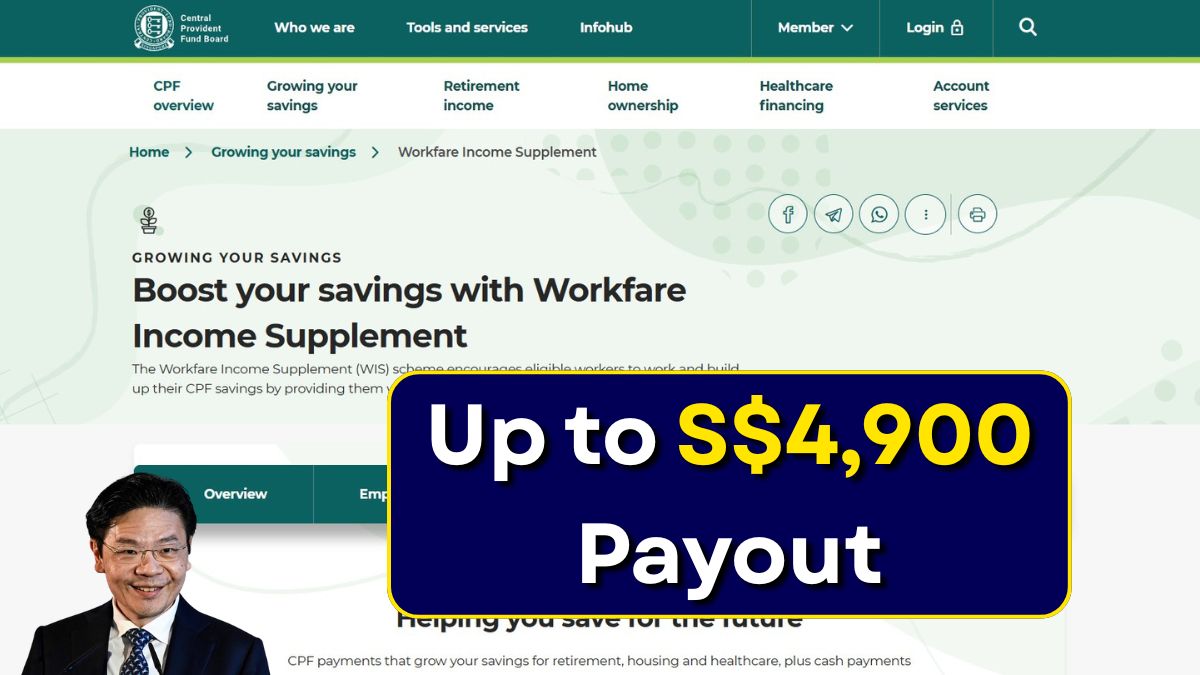
- Eligible employees can receive up to S$4,900 per year, with payouts mostly done monthly.
As Singapore moves into 2026, WIS remains one of the most practical schemes for lower-wage workers who are feeling the squeeze from higher living costs. You keep working, CPF contributions continue, and WIS quietly tops up both your take-home income and your long-term security. No complicated hoops. No once-off handouts that disappear quickly.
This balance is intentional. The Government designed WIS to help with today’s bills — transport, groceries, utilities — while making sure you don’t reach your later years with an empty CPF account. For most Singaporeans, that matters more than it sounds.

| Category | Employees & Most Platform Workers | Self-Employed Persons (SEPs) |
|---|---|---|
| Max annual WIS (illustrative) | Up to S$4,900 | Lower tier, varies by income |
| Cash portion | 40% | 10% |
| CPF portion | 60% (OA / SA / MA) | 90% to MediSave |
| Payment timing | Monthly | Annual |
| Application needed | No (auto-assessed) | Income declaration required |
What exactly is WIS — and why the split matters
WIS is meant for Singapore citizens earning lower monthly incomes. Instead of giving out pure cash, the support is split between cash and CPF.
The cash portion helps with immediate needs — daily transport, household bills, children’s expenses. The CPF portion stays with you, growing over time to support housing, healthcare, and retirement. Honestly speaking, this is why WIS doesn’t feel like “money that’s gone next month”. Part of it is doing long-term work in the background.
What changed heading into 2026
The most important improvements came from Budget 2024, and they continue to apply through 2025–2026.
The headline change is the higher support level. Eligible employees can now receive up to S$4,900 per year, depending on age and income tier. Compared to earlier years, that’s a noticeable boost, especially when spread out monthly.
Another major shift affects platform workers. From 2025, eligible platform workers receive WIS monthly instead of annually, which helps with cashflow. As CPF rules for platform workers continue aligning with employees up to 2029, their WIS treatment increasingly mirrors that of regular employees.
How WIS payments are split
Employees and most platform workers
If you’re treated as an employee for CPF purposes, WIS is split 40% cash and 60% CPF.
The cash portion goes straight to your PayNow (NRIC-linked) or registered bank account. The CPF portion is credited into your CPF accounts according to standard allocation rules. You don’t need to apply — eligibility is assessed automatically using CPF records.
Self-employed persons (SEPs)
SEPs receive 10% in cash and 90% into MediSave. This reflects the fact that SEPs manage their own CPF and healthcare funding.
One key difference to note: employees and most platform workers receive WIS monthly, while SEPs receive it once a year, after income declaration and MediSave contributions are confirmed.
Who qualifies for WIS (quick overview)
Eligibility is assessed automatically based on CPF and income data. In general, you must:
- Be a Singapore citizen
- Meet the income ceiling for your age group
- Work a minimum number of months in the year
- Have CPF contributions (employees) or declared income with MediSave contributions (SEPs)
Older workers receive higher WIS amounts, recognising that they have less time to build retirement savings. Because income thresholds can change, it’s safer to check your own status via CPF e-services rather than rely on hearsay.
Real-life examples (simplified)
Example A: Employee earning S$1,700 per month
Anna qualifies for a higher WIS tier.
- Annual WIS: S$4,900
- Cash (40%): S$1,960 spread across the year
- CPF (60%): S$2,940 credited into her CPF accounts
She gets monthly help with expenses, while her CPF balance grows quietly in the background.
Example B: Self-employed worker
Ben qualifies for WIS based on his declared income.
- 10% paid in cash
- 90% credited into MediSave
There’s less cash upfront, but stronger healthcare protection over time.
These figures are illustrative. Actual payouts depend on age, income, and the official WIS schedule.
How and when you’ll get paid
For employees and most platform workers, WIS is credited monthly for eligible work months. Cash goes to your PayNow or bank account, and CPF goes directly into your CPF accounts.
If your bank details or PayNow are not updated, payments may be made via GovCash, which is slower. No need to overthink — just keep your details current.
SEPs receive WIS annually, after income declaration and MediSave contributions are completed.
Why WIS uses cash plus CPF — not cash only
There’s a clear reason this structure remains.
Cash helps now. CPF protects later. And because WIS is tied to work, it supports continued employment rather than discouraging it. For most Singaporeans, this balance works better than a one-off payout that disappears after a few months.
What platform workers and SEPs should watch closely
Platform workers should remember that monthly WIS payments started in 2025, and CPF alignment continues until 2029. Over time, treatment will look more like that of employees.
SEPs must not miss income declaration or MediSave contributions. Even if your income qualifies, WIS will not be paid if these steps are skipped.
How to check your WIS quickly
Log in to CPF e-services to view your eligibility and payment history. If something doesn’t look right, first check whether CPF contributions were made correctly or whether income was declared.
If needed, follow up with your employer, platform, or CPF Board to resolve issues early.
Using WIS wisely — short term and long term
The cash portion works best for essentials: clearing high-interest debt, covering daily bills, or building a small emergency buffer.
The CPF portion does its job quietly. Over the years, these credits can improve housing options, healthcare coverage, and retirement income. Small amounts really do add up.
Frequently Asked Questions
Is WIS automatic or do I need to apply?
For employees and most platform workers, WIS is assessed automatically. No application is needed. SEPs must declare income and make MediSave contributions.
Will WIS affect other government assistance?
WIS is meant to complement other schemes. Whether it affects other support depends on each scheme’s rules, so always check the specific programme conditions.
How can I estimate my WIS payout?
You can refer to published WIS tables by age and income, but the most accurate way is to log in to CPF e-services and view your computed entitlement.
Final take for Singapore workers
WIS isn’t flashy. But it’s steady, practical, and quietly effective.
By combining cash support with CPF savings, the 2025–2026 WIS structure gives lower-wage Singaporeans some breathing room today while strengthening retirement security over time. If you’re working and eligible, checking your CPF account regularly is still the best way to see the full picture.
Sources (Official Singapore Government Websites)
- Central Provident Fund Board – https://www.cpf.gov.sg
- CPF LIFE Scheme Overview – https://www.cpf.gov.sg/member/retirement-income
- Retirement Sum Scheme – https://www.cpf.gov.sg/member/retirement-income/rss
- CPF Withdrawal Rules – https://www.cpf.gov.sg/member/withdrawals
